
The Parthenon at a glance
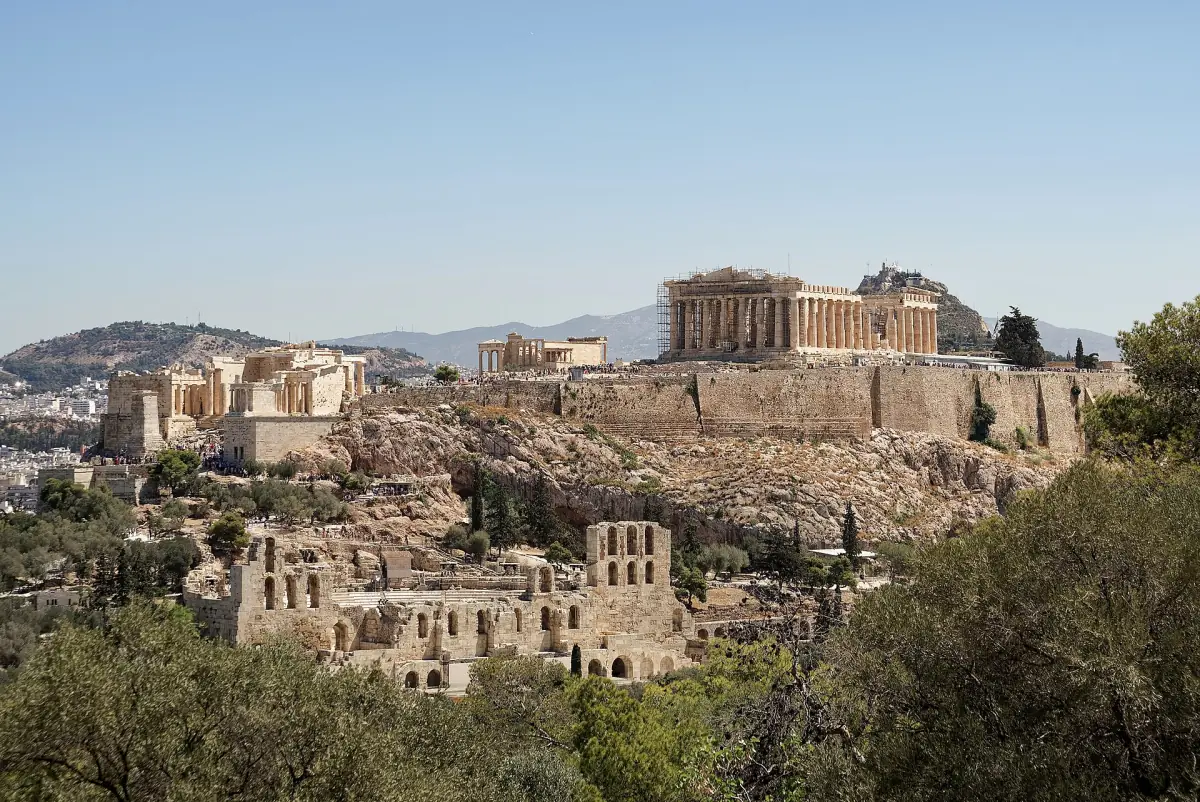
The Parthenon is the large Doric temple on the Acropolis, built for Athena Parthenos, the patron goddess of Athens. It went up between 447 and 438 BC, and work on its sculptural decoration continued until 432 BC. The architects were Iktinos and Kallikrates; the sculpture was made under the direction of Phidias.
Today it is the main reason most people climb the hill. You see it with the regular Acropolis ticket, which costs €30 in 2026 (reduced €15) and needs a time slot. There is no separate ticket for the temple.
History: a temple for Athena
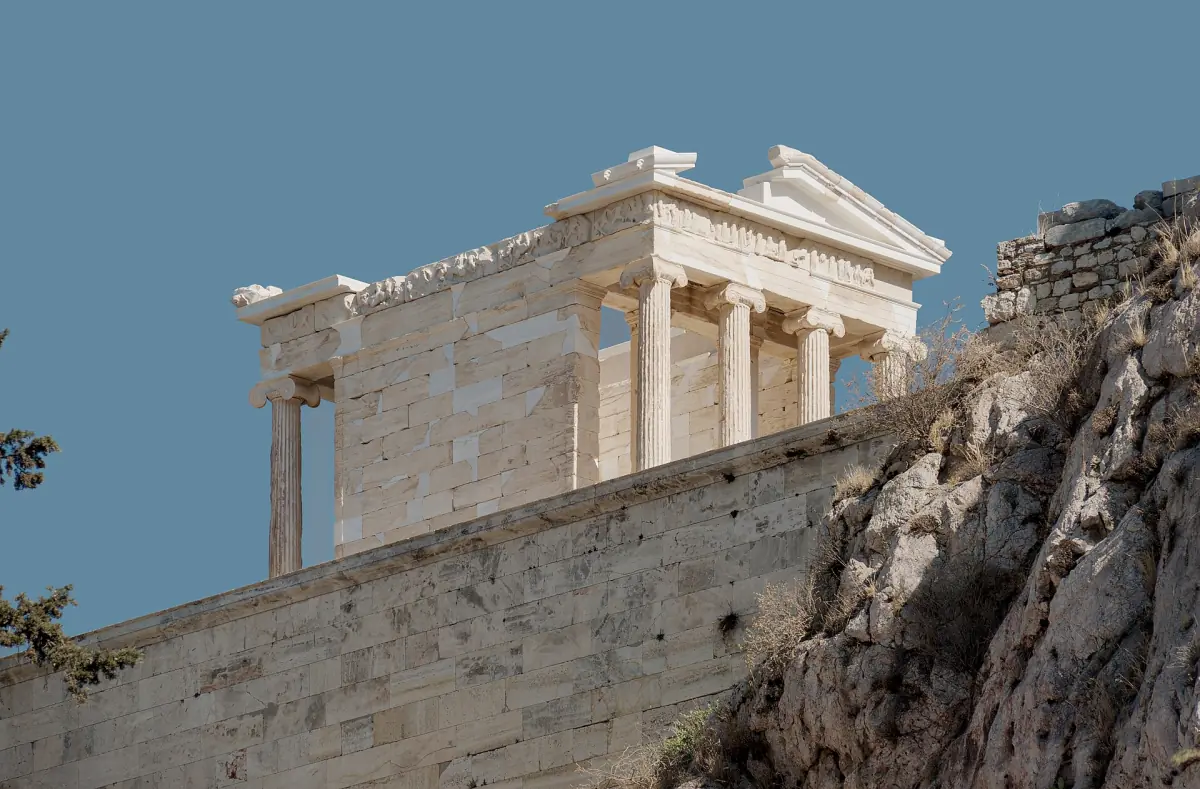
The Parthenon was part of the great building programme of the Periclean age, the same programme that produced the Propylaia gateway and the small Temple of Athena Nike in the second half of the 5th century BC. Together they shaped the Acropolis you visit today.
Inside stood the statue of Athena Parthenos, made of gold and ivory. The statue is lost. What survives is the stone building and part of its sculpture, above all the frieze and the figures from the pediments.
Our picks: Parthenon tours
A tour with entrances and the old town, a classic guided tour and an early-morning tour.
Hand-picked tours, booked through GetYourGuide. Prices are indicative starting prices in euros (as of October 2026). Tap a tour for live availability and the current price in your currency.
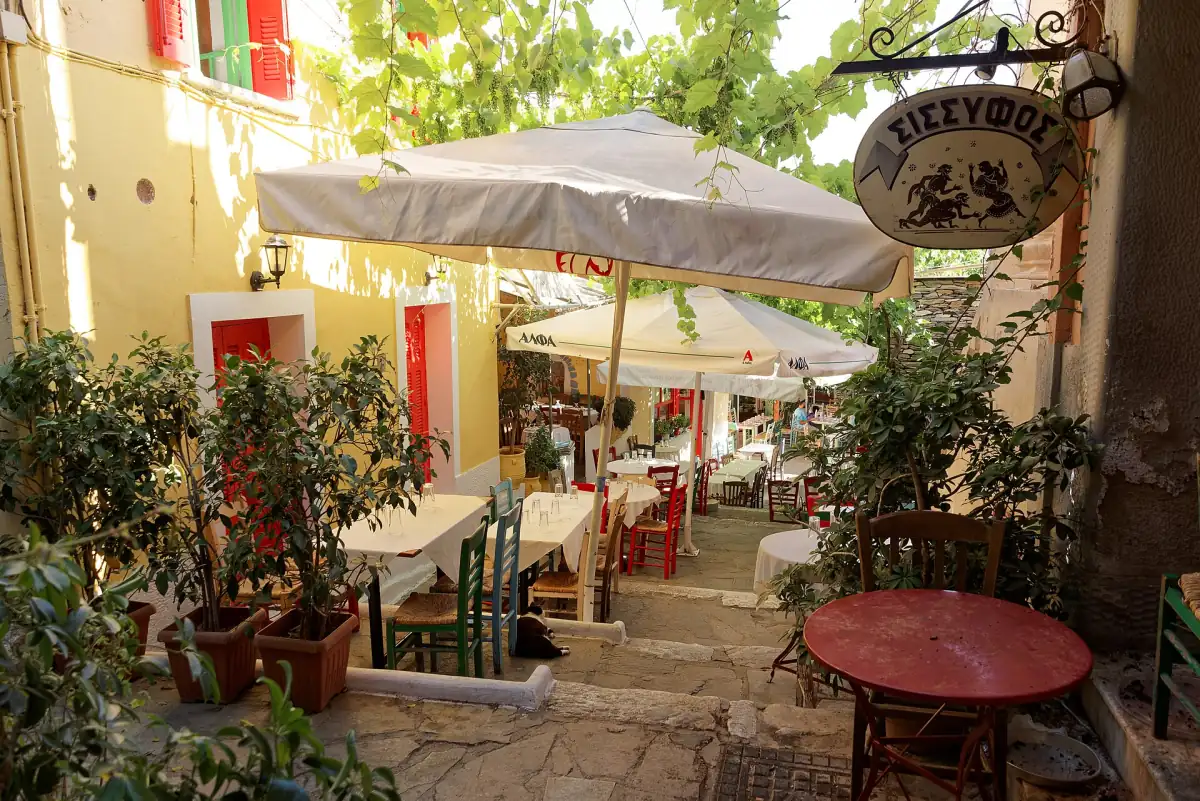
Acropolis, Parthenon and Plaka guided tour with entrances
The hill with a guide, then a walk through the old town below. Entry tickets are part of the tour.
Check availability →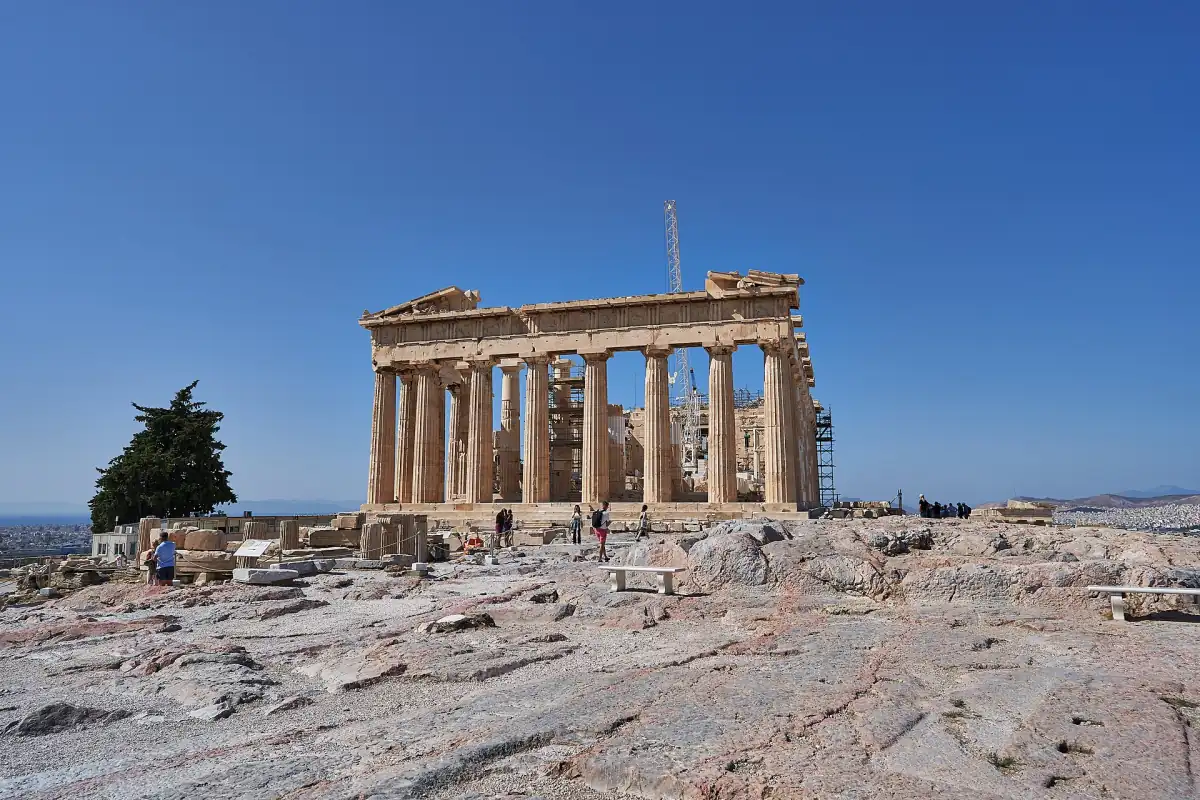
Acropolis and Parthenon guided tour
A popular guided tour of the hill. The price is for the guide; the €30 Acropolis ticket is added only if you choose that option.
Check availability →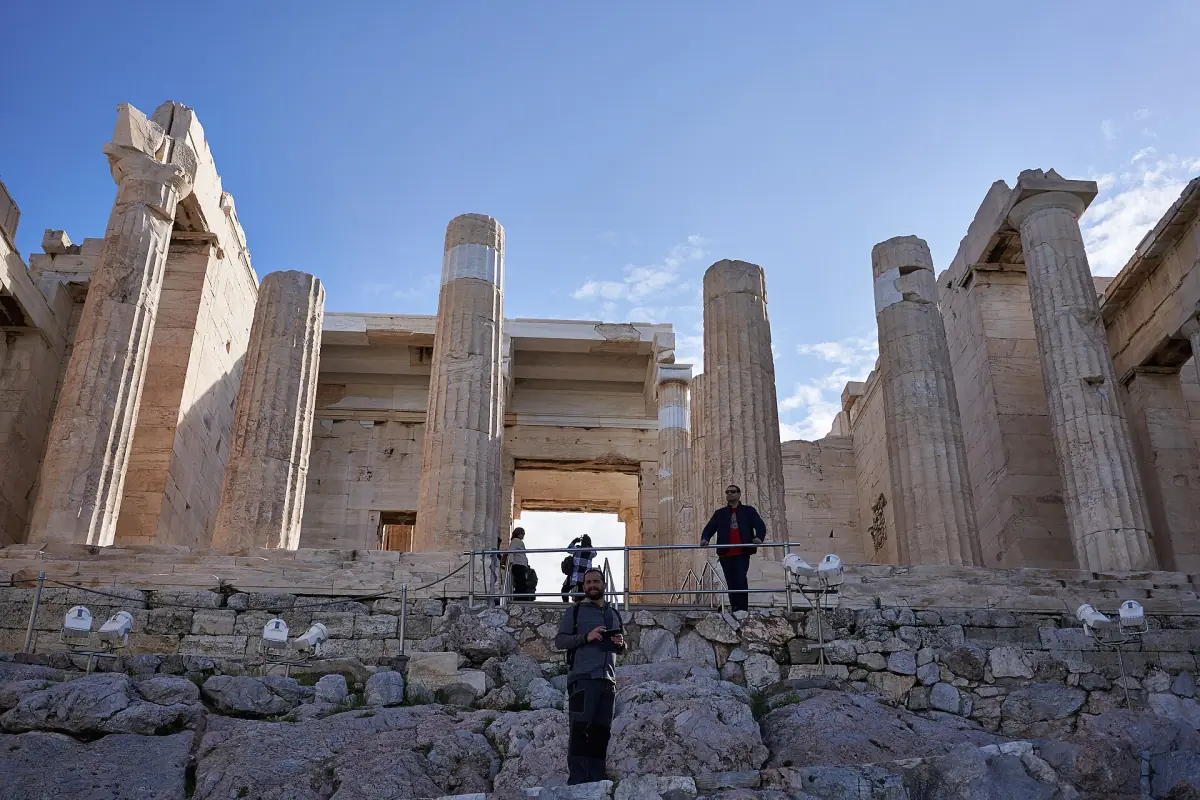
Early morning guided tour of the Acropolis and Museum
An early start for cooler temperatures. The price is for the guide; the €30 Acropolis ticket is added only if you choose that option.
Check availability →Acropolis and Parthenon tours
Guided tours of the Acropolis and the Parthenon, early and late tours and combinations with the Acropolis Museum, with live prices and availability.
Architecture: the temple and its sculpture
The Parthenon is a Doric temple, built in one of the classical orders of Greek temple architecture. Iktinos and Kallikrates designed the building; Phidias directed the work on its sculpture. Three parts matter most for a visit:
- The frieze: a long relief band that ran around the building. Much of what survives is in the Parthenon Gallery of the Acropolis Museum, hung in its original orientation.
- The pediments: the triangular gables at the east and west ends, once filled with large figures. The west pediment was completed again in 2026, see below.
- The cella: the inner room that held the statue of Athena. Its walls are one of the current restoration projects.
A good way to understand the building is to see the sculptures at eye level in the museum and then the temple itself on the hill. Our page on the Acropolis Museum explains the Parthenon Gallery and how to combine both.
Later uses: church, mosque and powder store
The Parthenon was in use for far longer as something other than a temple.
Church of the Panagia
In Christian times the temple became a church dedicated to the Virgin Mary, the Panagia. In the 11th century it was the cathedral of Athens.
Ottoman mosque
Under Ottoman rule the building was converted into a mosque. Later the Ottomans also used it to store gunpowder.
26 September 1687
During the Venetian siege of the Acropolis under Morosini, a Venetian shell hit the powder store inside the Parthenon, and the temple exploded.
1801 to 1802
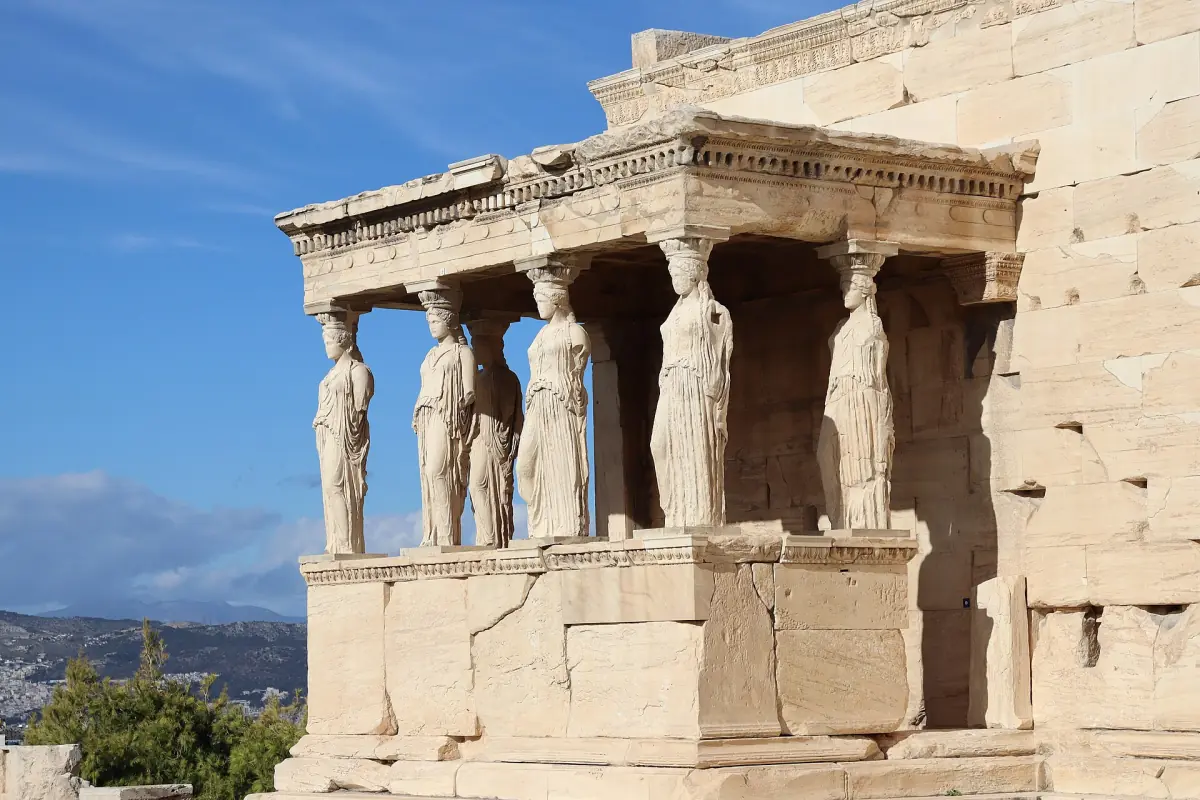
Lord Elgin had sculptures removed from the Parthenon, the Temple of Athena Nike and the Erechtheion. Many of them are in the British Museum today.
The restoration since 1975
Restoration on the Acropolis has run without a break since 1975. It is overseen by a dedicated committee, known by its Greek initials ESMA, and carried out by the Acropolis restoration service YSMA.
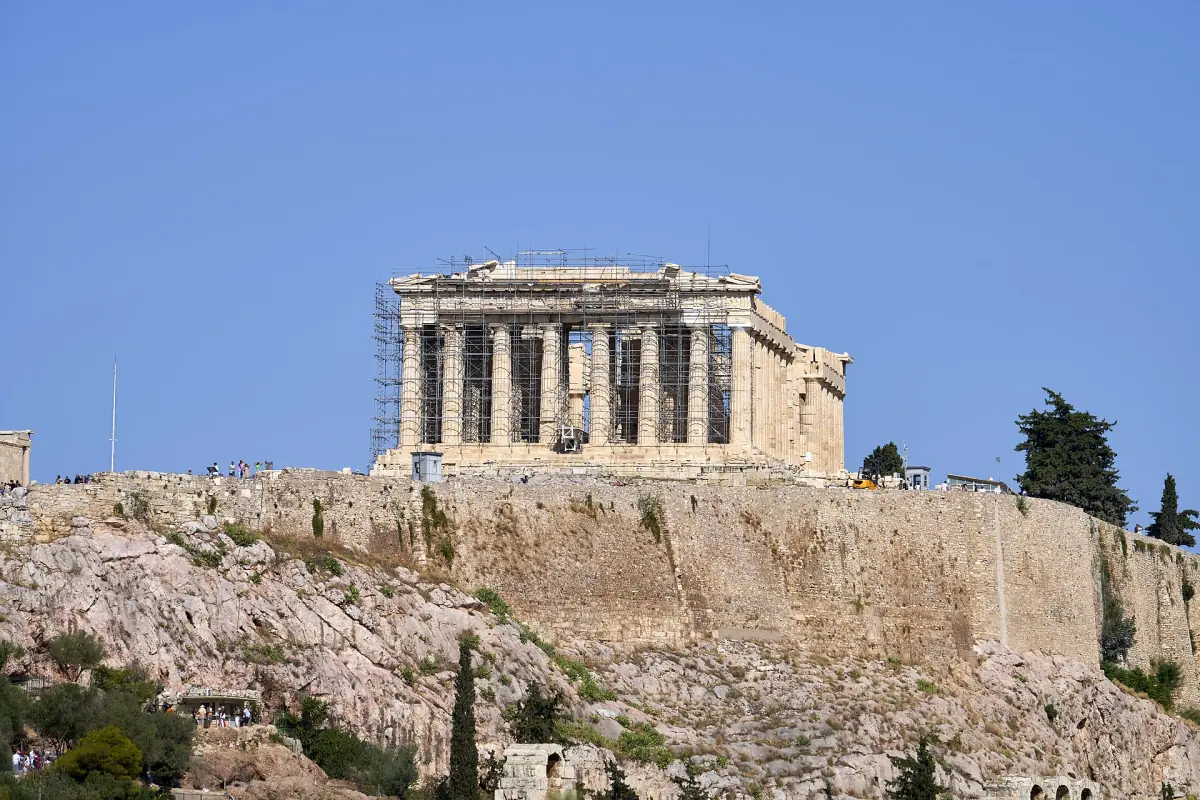
For decades, scaffolding and cranes were part of the view. Many photos of the Parthenon you will find online, including older ones on this site, show it in that state. The work is not finished: the walls of the cella are still being restored, from now on with smaller, flexible scaffolds rather than the large structures of past years.
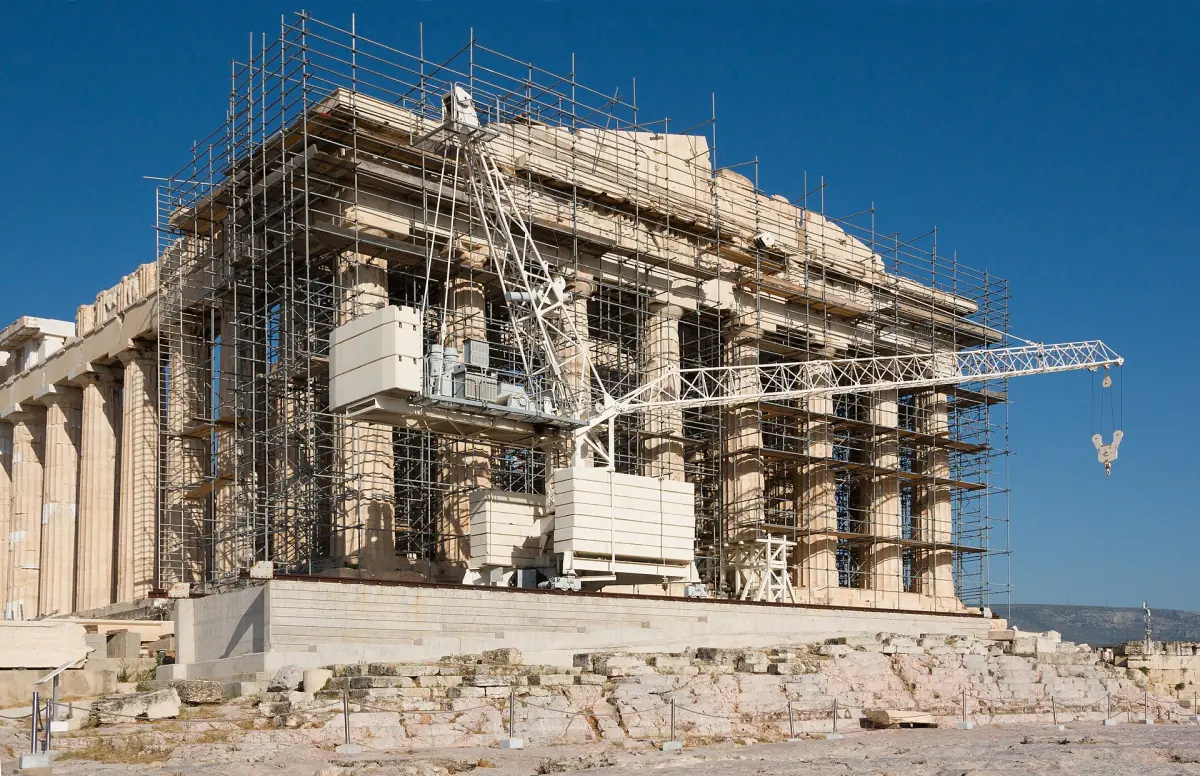
The Parthenon in 2026: the west side is clear
The photo here is an older one. It shows the west side of the Parthenon behind scaffolding, which is how visitors saw it for years. That has changed.
The west scaffolding was briefly taken down at the end of September 2025 and replaced by a lighter one. Since 15 June 2026, the external scaffolding on the west side is gone for good. At the same time, the west pediment is complete for the first time in around 220 years: two blocks of the tympanum, the back wall of the gable, were set in place on 3 and 5 March 2026.
Coming through the Propylaia, the west side is the first face of the Parthenon you see. Work continues on the walls of the cella, but the classic view of the west front is open again.
The Parthenon sculptures: where they are today
The sculptures removed under Lord Elgin in 1801 and 1802 are in the British Museum in London. About half of the surviving sculptural decoration of the Parthenon is there today. Most of the rest is in the Acropolis Museum in Athens, where the missing pieces of the frieze are shown as casts next to the originals.
Greece has asked for the sculptures to be returned. In the Parthenon Gallery you can see what that means in practice: originals and casts hang side by side.
What you see on a visit, and the best viewpoints
On the hill you get close to the temple. For its full shape above the city, look at it from one of the hills nearby.
| Viewpoint | What you see | Good to know |
|---|---|---|
| Propylaia, on the plateau | The west side, first view after the gateway | Needs the €30 Acropolis ticket; busiest from about 9 to 13 o'clock |
| Plateau near the Erechtheion | The Parthenon across the plateau | The lift for visitors with limited mobility arrives north of the Erechtheion |
| Areopagus | The Acropolis from close below, north-west of the main entrance | Free and open; the rock and steps are very slippery |
| Philopappos Hill | The whole hill with the Parthenon and the Odeon below | Free, open 24 hours; can close when there is a risk of forest fires |
| Lycabettus Hill | The Acropolis above the city, from further away | Best for a wide view across Athens |
| Acropolis Museum | The hill through the glass facade | Separate €20 ticket; closes at 22:00 on Fridays |
On the plateau there is almost no shade, and the marble paths are polished smooth. Wear flat shoes with grip and bring water. In summer, the 08:00 slot is the coolest time to see the Parthenon; outside high summer, the last one and a half to two hours before closing are usually calmer. Times are on our opening hours page.
More on the Acropolis
The other monuments on the hill and how to plan your visit.
The Parthenon: frequently asked questions
When was the Parthenon built?
Between 447 and 438 BC, with work on the sculptural decoration continuing until 432 BC. The architects were Iktinos and Kallikrates, and Phidias directed the sculpture.
Is the Parthenon still covered in scaffolding?
Not on the west side. Since 15 June 2026 the external scaffolding there has been removed for good. Restoration continues on the walls of the inner room, with smaller scaffolds.
How was the Parthenon destroyed?
On 26 September 1687, during the Venetian siege under Morosini, a shell hit the gunpowder the Ottomans had stored inside, and the temple exploded.
How much does it cost to see the Parthenon?
The Parthenon is covered by the Acropolis ticket, €30 in 2026 or €15 reduced. Visitors from EU countries up to 25 and children from outside the EU up to 18 enter free with ID.
Where are the Parthenon sculptures?
About half of the surviving sculptures are in the British Museum in London, most of the rest in the Acropolis Museum in Athens. Greece has asked for their return.
Where is the best view of the Parthenon?
On the hill, from the Propylaia and across the plateau. From outside, Philopappos Hill and the Areopagus are free viewpoints close by.