
The Acropolis Museum at a glance
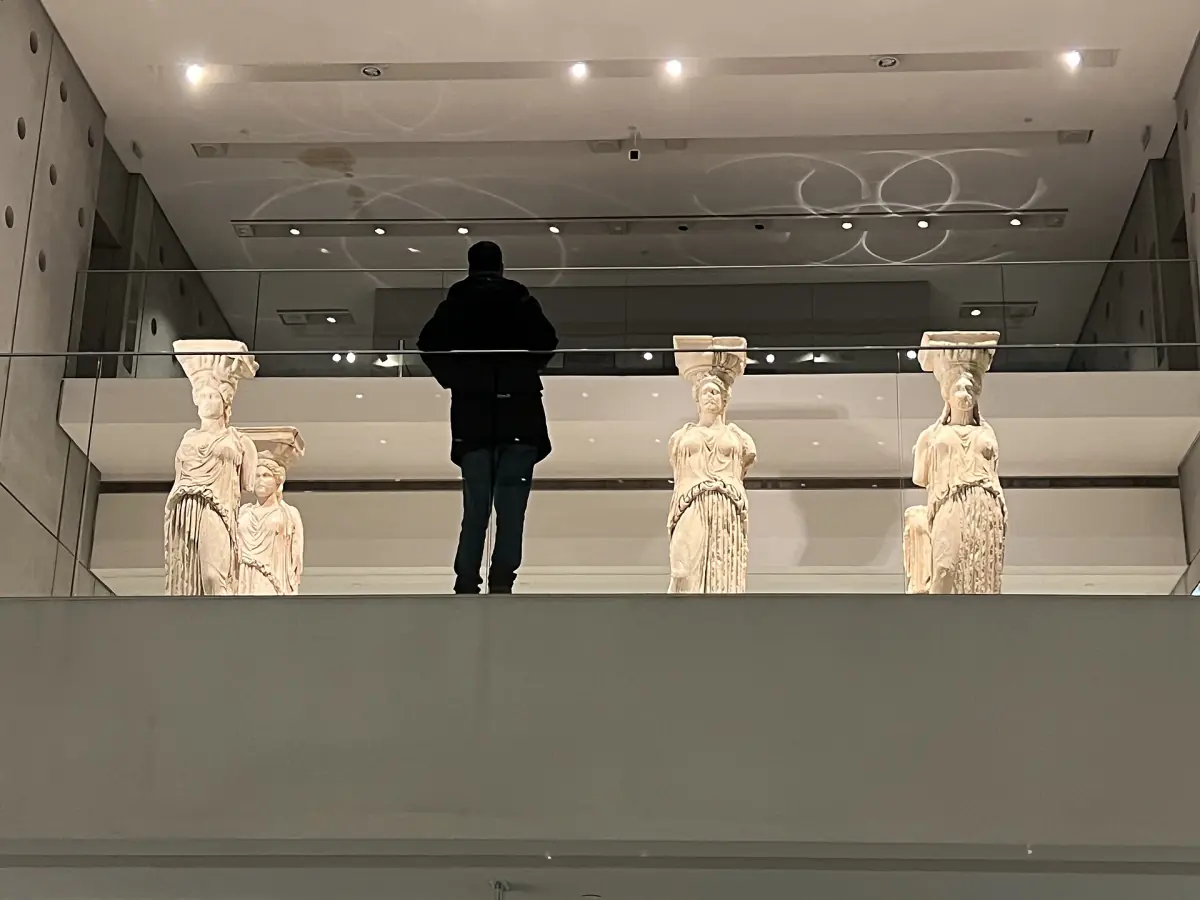
The Acropolis Museum stands at Dionysiou Areopagitou 15, right next to Akropoli metro station on line 2 and a few minutes on foot from the south entrance of the Acropolis. It holds the finds from the hill and its slopes: the five original Caryatids of the Erechtheion, the Archaic statues and the surviving sculptures of the Parthenon that are still in Athens. Through the glass facade you look straight up at the hill.
The museum is run separately from the archaeological sites. It has its own ticket, its own opening hours and its own rules for reduced and free entry. Your Acropolis ticket does not get you in, and the museum ticket does not get you onto the hill.
Acropolis Museum tickets: prices and who pays what
A full ticket costs €20 in 2026, the same all year. The reduced ticket costs €10. The rules are not the same as at the Acropolis, so check them separately.
- Reduced (€10): visitors from outside the EU under 25, and Greek and EU citizens over 65. Unlike at the Acropolis, the senior reduction here applies all year, not only from October to May.
- Free: visitors from EU countries under 25 and children from outside the EU up to 5, among other groups. Note the difference: at the Acropolis, children from outside the EU enter free up to 18.
- Free days: 6 March, 25 March, 18 May and 28 October. These are not the same as the free days at the Acropolis; 25 March is a free day at the museum while the Acropolis is closed.
The museum ticket is separate and cannot be combined with the Acropolis ticket. The old combined ticket for Athens' archaeological sites did not include the museum either, and it was abolished in April 2025.
Online or at the desk?
Online, on the museum's ticket site etickets.theacropolismuseum.gr, you can only buy full tickets at €20. Online tickets use their own priority lane at the entrance, which helps at busy times.
Reduced and free tickets are only issued at the ticket desk. If you qualify, go to the desk with your ID or passport rather than buying a full ticket online. The same applies if a tour bundles a full museum ticket and you would enter cheaper or free: a guide-only option is then the better deal. More on that in our guide to Acropolis tours.
Sites that charge more than €20 for a full museum ticket are resellers, not the museum.
Acropolis Museum opening hours 2026
Two seasons, with a late opening on Fridays all year. Last entry is 30 minutes before closing.
| Day | Summer (1 Apr to 31 Oct) | Winter (1 Nov to 31 Mar) |
|---|---|---|
| Monday | 09:00–17:00 | 09:00–17:00 |
| Tuesday to Thursday | 09:00–20:00 | 09:00–17:00 |
| Friday | 09:00–22:00 | 09:00–22:00 |
| Saturday and Sunday | 09:00–20:00 | 09:00–20:00 |
| Excavation below the museum | Tuesday to Sunday until 20:00 | Daily 09:00–17:00 |
The museum is closed on 1 January, Orthodox Easter Sunday, 1 May, 25 and 26 December. On 24 and 31 December it opens from 09:00 to 15:00.
Our picks: Acropolis Museum tours and tickets
The museum with the hill, a museum-only guided tour and a ticket with audio guide.
Hand-picked tours, booked through GetYourGuide. Prices are indicative starting prices in euros (as of October 2026). Tap a tour for live availability and the current price in your currency.
Parthenon, Acropolis and Museum small-group tour
The hill and the Acropolis Museum with the same guide, in a small group. Check which tickets your option includes before you book.
Check availability →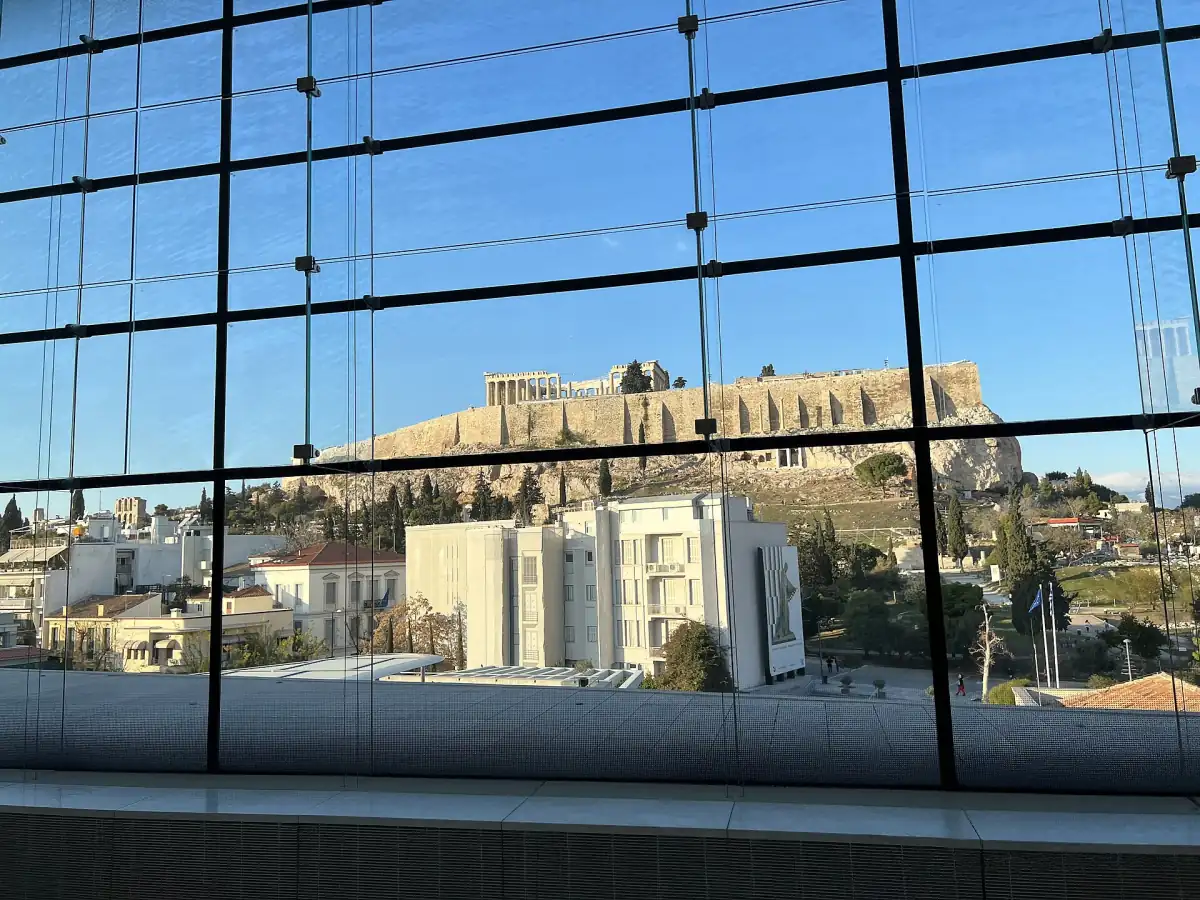
Acropolis Museum guided tour
A guide takes you through the galleries to the Caryatids and the Parthenon frieze. Compare it with the official €20 museum ticket.
Check availability →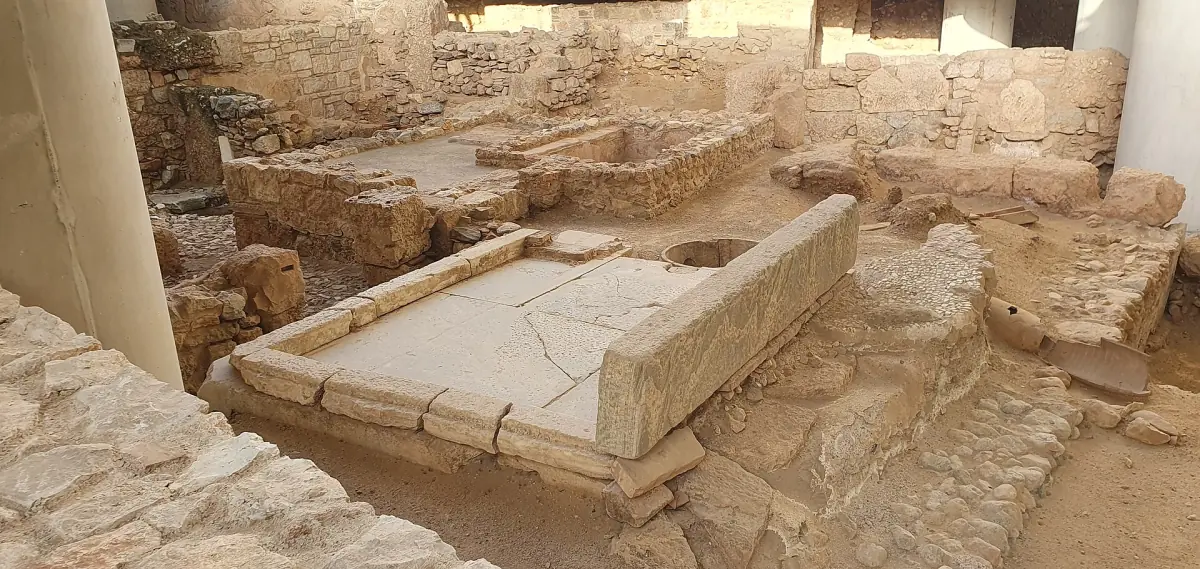
Acropolis Museum ticket with optional audio guide
A reseller museum ticket. Officially the full ticket costs €20 online or at the desk.
Check availability →Acropolis Museum tickets and tours
Museum tickets and guided tours that combine the Acropolis Museum with the hill, with live prices, languages and availability.
What to see, floor by floor
Start at the bottom and work your way up: finds from the slopes first, then the Archaic statues, then the Parthenon.
Ground floor: Gallery of the Slopes
Finds from the slopes of the Acropolis, the area your ticket for the hill also covers. A good start before you go up to the main galleries.
First floor: Archaic Gallery
Sculpture from the Archaic period, the time before the Parthenon was built. Photography is not allowed in this gallery, so put the phone away and take your time.
The Caryatids
Five of the six original maidens from the Erechtheion porch. The figures on the temple today are copies; the sixth original is in the British Museum in London.
Top floor: Parthenon Gallery
The frieze of the Parthenon, hung in its original orientation around the gallery. Missing pieces are shown as casts, so you see which parts are here and which are elsewhere.
The excavation below the museum
The museum is built above the remains of an ancient residential quarter. The excavation is included in your museum ticket. You reach it from the forecourt in front of the entrance, so it is easy to see either before or after the galleries.
Its hours are shorter than the museum's in places: in summer it is open Tuesday to Sunday until 20:00, in winter daily from 09:00 to 17:00. On a Friday evening, see the excavation first.
Photos, security and bags
- Photos: allowed in most of the museum, without flash and without a tripod. Not allowed in the Archaic Gallery on the first floor.
- Security: everyone goes through a check with an X-ray scanner at the entrance. Allow a few extra minutes at busy times.
- Bags: large bags have to go into the cloakroom. Travel light if you are coming straight from the Acropolis, where large suitcases are not allowed either.
Combining the museum with the Acropolis
The two sit a few minutes apart along the pedestrian street Dionysiou Areopagitou, so a combined half day is easy. Plan about two hours for the hill and the south slope and two hours for the museum. Keep in mind that the Acropolis ticket allows one entry only: once you leave the hill or the south slope, you cannot go back in with the same ticket. Visit the museum before or after, not in between.
- In summer: take the 08:00 slot at the Acropolis, then walk down to the museum, which opens at 09:00. You spend the hot midday hours indoors.
- For context first: visit the museum the afternoon before, or on a Friday evening until 22:00, and the hill the next morning. You will recognise the sculptures' places on the buildings.
- In winter: the Acropolis closes at 17:00, and so does the museum from Monday to Thursday. Start on the hill early and use Friday or the weekend for the museum.
See our Acropolis opening hours for the hill's seasonal times.
Related pages
The monuments behind the museum's collection.
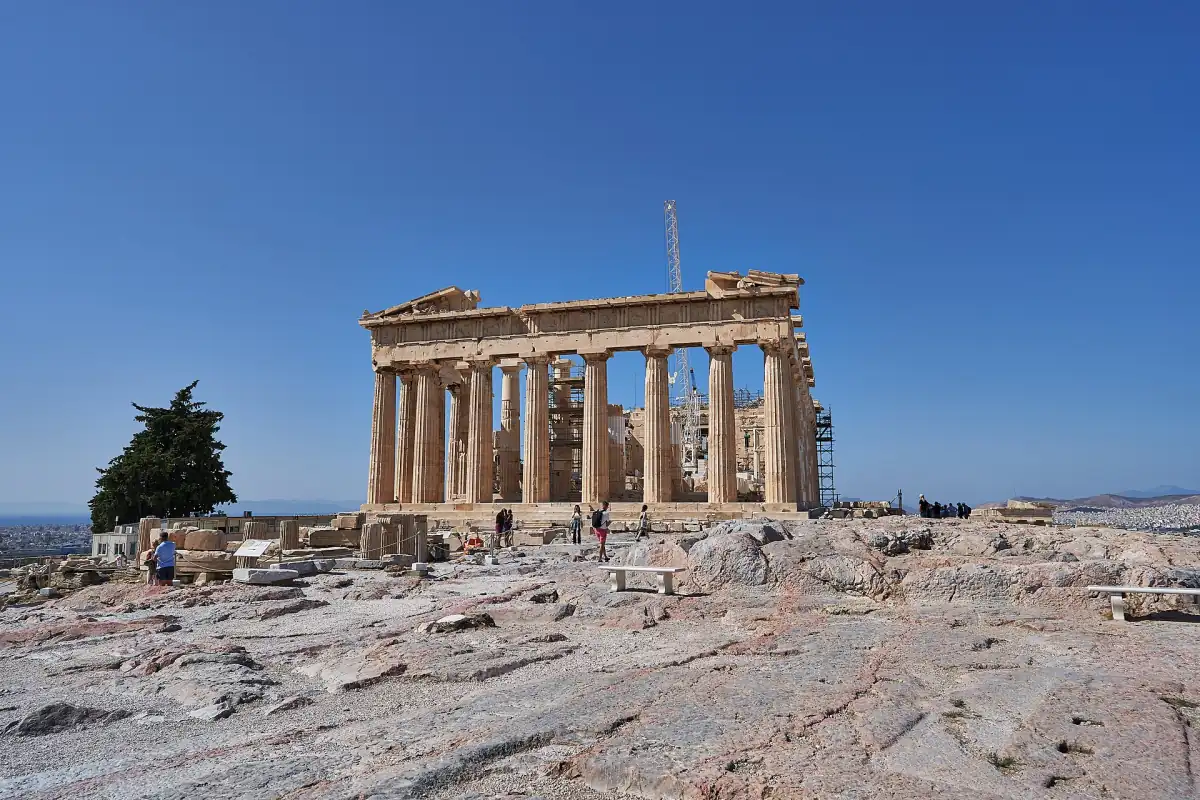
The Parthenon
History, the 1687 explosion, the restoration and where the sculptures are today.
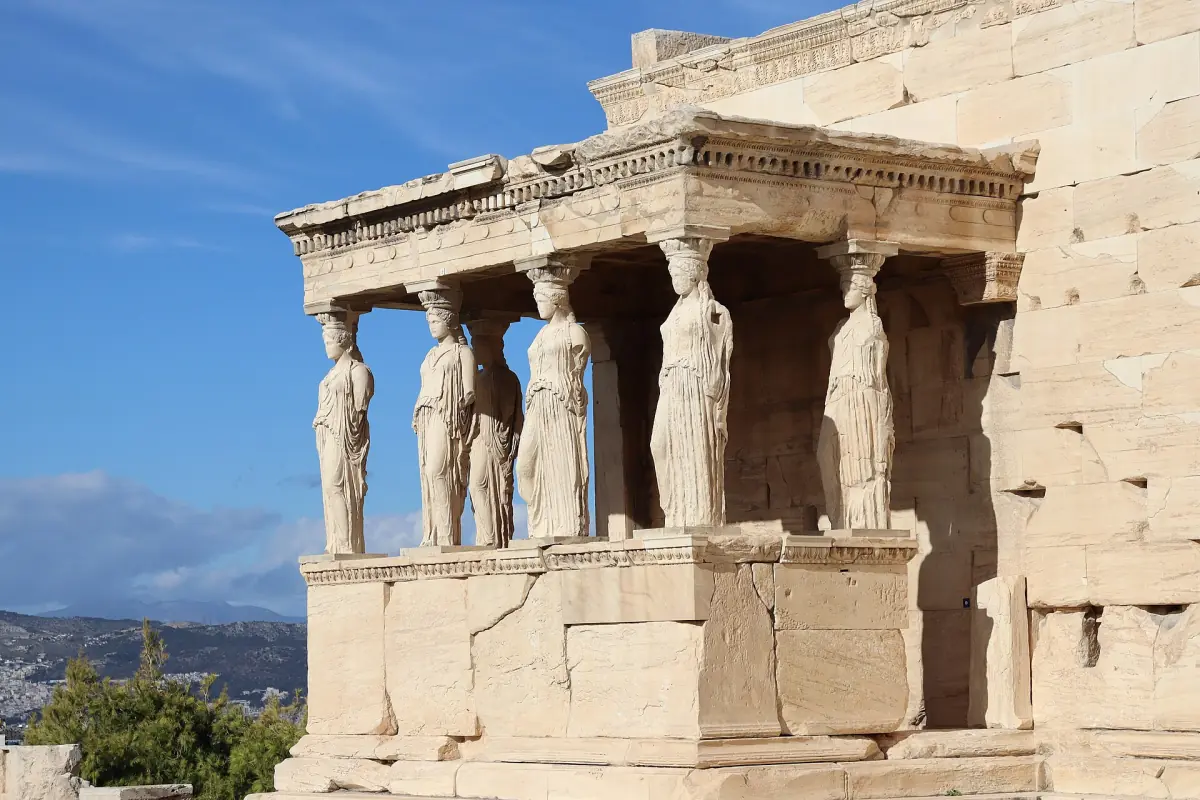
Erechtheion
The temple with the Porch of the Caryatids, where copies stand in place of the originals.
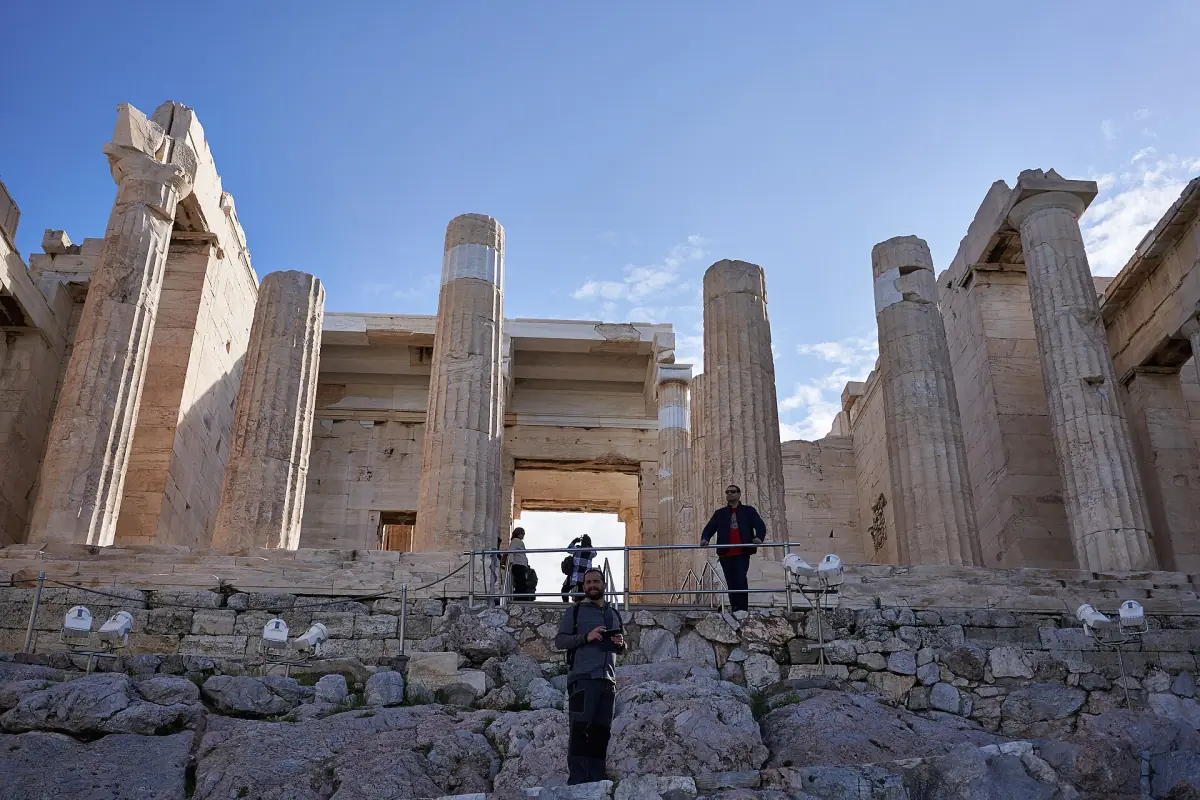
Acropolis tickets
The €30 ticket for the hill, time slots, free days and reductions.
Acropolis Museum: frequently asked questions
How much is the Acropolis Museum ticket?
€20 in 2026, or €10 reduced, all year. Visitors from EU countries under 25 enter free. Reduced and free tickets are only available at the ticket desk.
Is the Acropolis Museum included in the Acropolis ticket?
No. The museum has its own ticket and its own rules. The €30 Acropolis ticket covers the hill and its slopes only.
Which day is the Acropolis Museum open late?
Friday, all year: from 09:00 to 22:00. On the other days it closes at 20:00 or 17:00, depending on season and weekday; Monday is always 17:00.
Can I take photos in the Acropolis Museum?
Yes, in most galleries, without flash and tripod. Photography is not allowed in the Archaic Gallery on the first floor.
Should I visit the museum before or after the Acropolis?
In summer, go to the hill first at 08:00 and the museum afterwards to avoid the heat. If you want context, visit the museum the day before.
Are the real Caryatids in the museum?
Five of the six are. The sixth original is in the British Museum. The Caryatids on the Erechtheion today are copies.